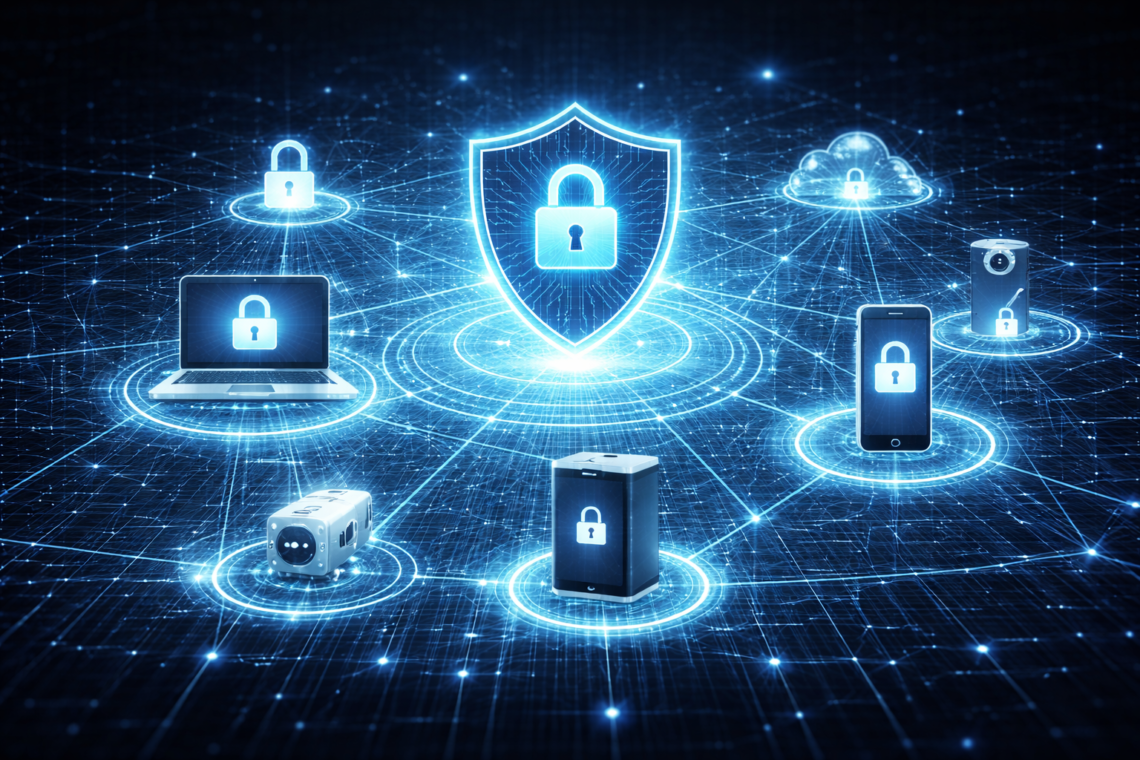
Cybersecurity has become one of the most important business, government, and individual concerns in the global context due to the continuing digital advancement in many sectors. The fast rise in the quantity of interconnected gadgets, cloud technologies, artificial intelligence, and remote working in 2026 has drastically amplified the amount of sensitive data flowing through cyberspace. Such a transformation also comes with an additional burden to safeguard the digital infrastructure as well as individual data against increasingly more advanced cyber threats.
Companies worldwide are enhancing their cybersecurity measures to meet the changing nature of the digital risks. Since ransomware attacks of corporate networks and phishing attacks of individuals are just examples of cybercrime, it has evolved both in magnitude and sophistication. According to experts, effective and proactive security practices, modern-day monitoring tools and appropriate levels of cybersecurity awareness will be beneficial in securing data in an ever-connected world.
The Increasing Significance of Cybersecurity.
By 2026, more than ever before, the number of connected devices is ever increasing. Connected cars, wearable computers, factories, smart homes, and services on the cloud have become common commodities in our lives. Although the technologies are convenient and efficient, they also present new points of entry by cybercriminals.
Cybersecurity is becoming a priority of organizations as they embark on transforming themselves by utilizing the digital transformation process. Protecting data is no longer a matter of IT, but rather a matter of business criticality in terms of customer confidence, regulatory adherence and business stability.
Firms are spending more on the enhanced security systems to secure confidential information like financial records, personal identity, intellectual property and healthcare data. The governments are also enacting more stringent cybersecurity laws and data protection laws that are to be enforced to make sure that organizations follow responsible security practices.
Emerging Cyber Threats in 2026
Advanced ransomware attacks are used by organizations to store data in a cloud environment.
Ransomware remains one of the most harmful cyber attacks. Hackers gain access to systems, encrypt valuable information and charge fees to restore functionality. A group of ransomware attackers are employing more sophisticated strategies, such as artificial intelligence and automated attack instruments, to locate loopholes quicker than at any previous time.
AI-Powered Phishing
Cybercriminals are becoming more involved in artificial intelligence to develop very realistic phishing messages. The attacks usually pose as trusted organizations and hence are more difficult to be traced by individuals and employees.
Vulnerabilities of Internet of Things (IoT).
The Internet of Things has increased the cybersecurity threat surface due to billions of interconnected devices in the workplace and homes. Several IoT devices do not have solid security controls and hence are viable targets of a hacker who aims at targeting bigger networks.
Supply Chain Attacks
Contemporary companies are dependent on various online sellers and third-party solutions. Supply chains have become the target of cyber attackers, who take advantage of the vulnerabilities present in the system of partners to access a bigger organization.
Major Data Protection Strategies.
Zero Trust Security Models
Organizations are embracing a model of cybersecurity that is known as Zero Trust Architecture which presumes that no device or user can be trusted automatically. All access requests are to be checked by identity checks and authentication.
Multi-Factor Authentication (MFA)
Multi-factor authentication also provides extra security procedures over passwords where users must identify themselves by either using a device, biometrics, or one-time codes.
AI-Driven Threat Detection
Machine learning and artificial intelligence tools are assisting cybersecurity departments to trace abnormal network activity in real time. The technologies enable the organizations to determine possible threats before they cause serious damage.
Cybersecurity Awareness of Employees.
One of the most significant causes of data breach is still human error. Frequent training programs assist the employees to become aware of the phishing attacks, suspicious links, and other cyber attacks.
The 2026 important Cybersecurity Practices.
By adhering to basic security measures, organizations and individuals may lower the risk of cybersecurity greatly:
- Frequent Software Updates: It is important to maintain the operating systems, applications and security patches to ensure that attackers cannot use familiar vulnerabilities.
- Good Password Policies: Complex passwords and password managers will facilitate unauthorized access.
- Data Encryption: This involves encrypting important information so that even when the attacker obtains the data, he or she is unable to decipher the information.
- Network Monitoring: Continuous monitoring systems are able to trace the abnormal activity and act on the threats as soon as possible.
- Secure Cloud Practices: Organizations need to provide powerful identity management and access control to cloud systems.
- Backup and Recovery Systems: Backing up of data regularly is a way of enabling organizations to recover ransomware attacks or system failures in a fast manner.
The Regulations and the role of Governments.
Governments across the globe are enforcing tougher cybersecurity models to safeguard national facilities and information of its people. Rules have changed so that organizations are now expected to disclose data breaches, implement better security measures and apply privacy-by-design standards.
The public-private alliances are also making a crucial contribution to enhancing the defense of cybersecurity on the international level. The interaction between technology firms, security experts, and governmental structures assists in discovering vulnerabilities, as well as they have a better chance to disseminate threat data.
Conclusion
In 2026, cybersecurity has been made a corporate responsibility to businesses, governments and individuals. Since the continuous rise of digital connectivity, the safety of sensitive data and essential systems must remain a priority of constant attention, creativity, and cooperation.
Companies investing in the development of more sophisticated cybersecurity technologies, awareness of employees, and proactive security measures will be more equipped to handle the dynamic threat environment. Meanwhile, people should not be careless about online risks and follow safe digital practices.
Through reinforcing systems of cybersecurity and adopting responsible data protection methods, the international digital community will be able to create a more resilient, safer, and trusted connected world of the future.
Plagiarism Commonly Asked Questions (FAQs).
1. Why will cybersecurity be even more significant in 2026?
The issue of cybersecurity is more than ever since the number of connected devices, cloud systems, and digital services has greatly grown to provide more opportunities to cyber threats.
2. What is the most significant cybersecurity threat nowadays?
Ransomware attacks are considered as one of the biggest threats as they may hamper the operations and lead to big losses by organizations.
3. What is Zero Trust security?
Zero Trust is an approach to security in which a user or device is not trusted by default. All requests to the system should be authenticated prior to system access.
4. What can people do to ensure the security of their information on the internet?
Users can enhance their security by means of strong passwords, multi-factor authentication, avoiding suspicious links, and updating software.
5. What benefit can artificial intelligence offer to cybersecurity?
AI is useful in identifying abnormal traffic, monitoring possible threats more quickly, and processing security surveillance of complex digital systems.
Share this content: