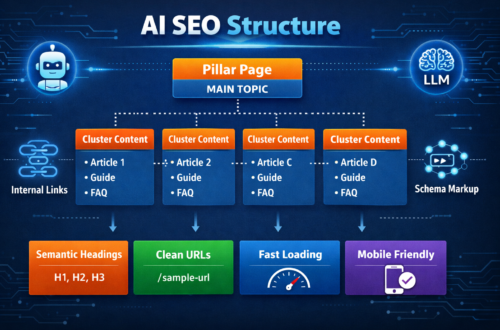
March 11, 2026—Hingona, Rajasthan, India: The modern competitive digital world has made the performance of websites a key factor to online prominence. The search engines have been giving more preferences to websites that are fast to load, easy to crawl, and offer a nice user experience. Therefore, technical SEO has turned into one of the most crucial tactics that businesses wishing to enhance their search engine positions and obtain organic traffic have to focus on.
According to the industry analysts, a solid technical basis is what allows search engines to crawl, index, and rank the web pages properly, although content and keywords are still fundamental. Even the most attractive content will not be able to be found in the search results without appropriate technical optimization.
Technical SEO aims at streamlining the technical configuration of a site. This involves enhancing page speed, correct indexing, crawl errors, site architecture, and the use of up-to-date web technologies that make it fast and easy to access.
The increasing role of technical SEO in digital marketing.
With millions of websites vying for visibility, search engines have been able to come up with high algorithms that measure the performance and usability of websites. Speed in loading, mobile compatibility, structured data, and security are now some of the necessary ranking signals.
Such websites not having these technical requirements normally have a slow indexing process, less search visibility, and decreased organic traffic. Conversely, companies that invest in technical enhancements of their SEO have better interaction with their users, better positioning, and more chances of conversion.
Digital marketers insist that technical SEO is not a single process and should be considered a continuous process, which needs continuous monitoring and upgrades.
Plans to Enhance Web Site Performance.
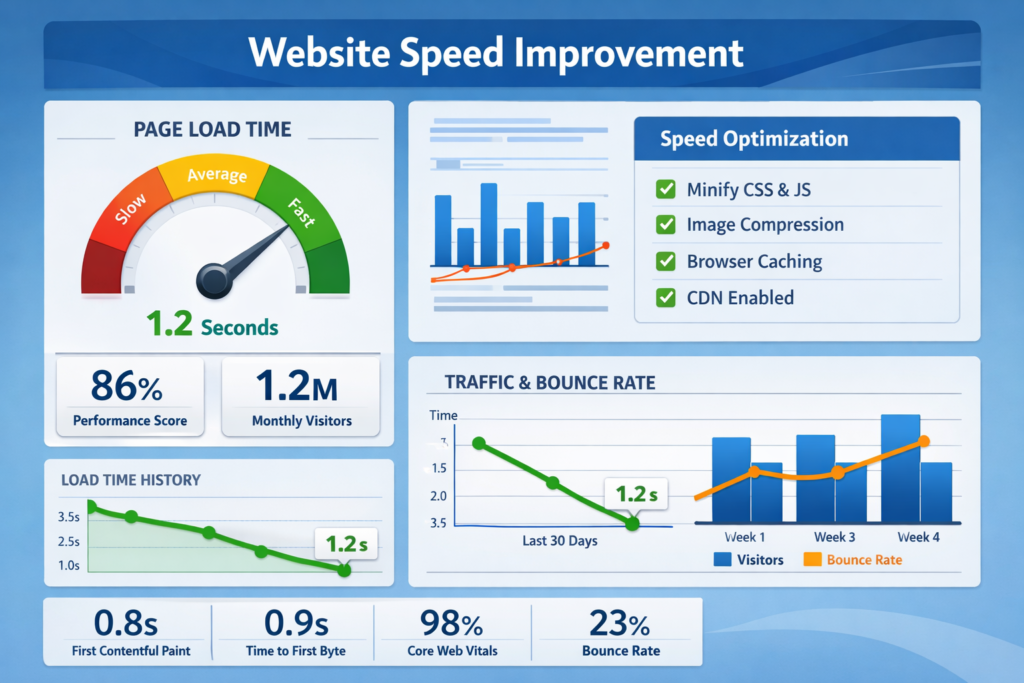
One of the strongest factors in user experience and search engine ranking is the speed of the website. A sluggish website may result in increased bounces, poor views, and lost business.
Image Optimization and Media Compression.
Big pictures and untuned media images usually make websites run slowly. Visualizing and sending of images: Visualizing and transmitting images can be achieved via compression as well as modern file formats like WebP, which greatly ensures reduction of file size without compromising quality.
With the right image optimization, the pages will load fast on any devices, especially on the mobile networks where the bandwidth could be low.
Server Response Time: Minimization.
The time that the servers take to respond to the user will directly influence the speed at which the users can load a page. Slow servers or overloaded environments hosting websites can cause delays, which affect performance in a negative way.
Dependable hosting services, database optimization, and eliminating unnecessary scripts can also help in increasing the speed of the server response and improving the speed of the website.
Browser Caching Implementation.
The browser caching stores the web resources in the browser of the visitor. Once users have been introduced to the site, files that were saved before will appear immediately as opposed to being downloaded again.
This will help to better the speed of loading and decrease the load on the server and thus make the browsing experience even more pleasant to the returning visitors.
Enhancing Crawlability and Indexing.
Search engines are based on crawlers, which are automated bots that search through the websites and index the pages. In case of errors or hindrances of such bots, there can be some valuable pages uncovered.
Creating an XML Sitemap
An XML sitemap is used as a guide in assisting the search engines in knowing how a site is structured. It indicates major pages and gives a value of the date of the last update.
By re-submitting a revised sitemap to the search engine, there are more chances of having new or changed pages being indexed expeditiously.
Effective Management of Robots. text.
The robots.txt file is a file that regulates the areas of a website accessible to the search engine bots. An effective robots.txt file will help the crawlers put their time and resources on the right pages instead of spending them on the irrelevant pages.
Wrong settings, though, may prevent the valuable pages from being indexed by accident, so regular testing is necessary.
Remediation of Broken Links and Crawl Error.
Lapsed links, blank pages, and redirect errors are also bad user experiences, and they do not support the crawling process. Periodical technical audits assist in determining such problems and make sure that all in-house connections are operating properly.
Having an orderly internal connecting system will assist search engines in moving around web pages easily.
Mobile Optimization and User Experience.
Since mobile devices do much of the internet traffic, search engines have moved to mobile-first indexing. This implies that a mobile version of a website will be ranked as the main version of the website.
The websites should have responsive designs that can fit in various screen sizes. Optimization of mobile is also covered with fast loading times, easy navigation, and easy formatting of the content.
Not only does a mobile-friendly site enhance the performance of the SEO, but it is also a guarantee that users can get access to information effortlessly irrespective of the device.
Search Visibility through Structured Data.
Marking up structured data assists search engines to interpret the context of the content on the websites. The schema markup can be used to provide more search options to the website, including rich snippets, star ratings, product details, and frequently asked questions.
Such optimized search results increase visibility and usually increase the number of clicks on the results pages of the search engines.
To take an example, websites deploying structured data on articles, products, and frequently asked questions (FAQs) might be seen displaying some more detail in search results, which would make them more appealing to the clients.
Implementation of Web Security and HTTPS.
Another necessary part of technical SEO is security. The search engines favor websites with HTTPS encryption, which is the one that guarantees secure communication between the users and the servers.
Confidential sites ensure the privacy of users and create trust in the visitor. Conversely, unsecure sites can invoke browser alerts that put away users of the site.
Use of HTTPS does not only enhance security but also adds value to search engines.
Technical SEO Impact on Long-Term Growth.
Technical SEO is a core element of online marketing as search algorithms keep changing. Companies that have properly organized websites with good speed as well as a powerful technical base have a higher chance of steadily gaining search presence.
Technical SEO should be improved in order to make websites not only accessible to search engines but also users. These optimizations will eventually lead to improved rankings, organic traffic, and improved online performance.
To keep the competitive edge in the search results, experts suggest that it is necessary to conduct regular audits of the webpage, keep track of the performance indicators, and keep up with the changing practices of SEO.
Frequently Asked Questions (FAQs).
1. What is technical SEO all about?
Technical SEO makes the search engines capable of crawling, indexing, and comprehending pages of the web sites efficiently and enhances the overall performance of the web sites.
2. What is the effect of speed on the user experience of websites?
A website that loads at a faster rate enables users to get the information they need in a shorter duration creating a decrease in the bouncing rate and enhancing engagement that will have a positive effect on search ranking.
3. What is mobile-first indexing?
Mobile first-indexing is where a search engine uses the mobile form of a webpage to index and rank the webpage.
4. What is the significance of XML sitemaps?
XML sitemaps assist search engine crawlers to locate pages of websites and comprehend the structure of the site to enhance the efficiency of indexing.
5. The frequency of technical SEO is required to be renewed?
Technical SEO must be tracked on a periodical basis and it is advisable to have a thorough audit after every few months to ensure the health of the website is at its best.
Share this content: