The rules in the current state of SEO are quite different. Some things that used to be effective such as the repetition of keywords several times are no longer effective. Search engines have been advanced to comprehend context, purpose, and worth. Consequently, the discussion of the importance of keyword density vs. topical authority is more significant than ever. In order to be ranked well in 2026, you must pay attention to the way the search engines assess content in the present day.
Knowing Keyword Density and its limitations.
- The percentage of times a keyword is used in content is called the keyword density.
- The previous strategies of SEO were based on a lot of repetition of keywords.
- Excessive use results in poor readability and experience.
- Keyword stuffing are punished by modern algorithms.
- Semantic comprehension lessens repetition.
What is Keyword Density?
An easy to understand concept of SEO is keyword density, which is the ratio of the number of times a particular keyword occurs to the overall words in a work. Though it has been extremely important in assisting the search engine to derive relevance, it is currently being used as a guideline rather than a rigid ranking factor. Excessive use of keywords may make the content unnatural and this is ultimately detrimental to the readability and ranking.
What Makes It Work No Longer As Before.
In ancient times, search engines were not advanced to comprehend the context and therefore, reiteration of keywords was a simple method of ranking. But as AI and natural language processing technology improved, algorithms today consider more meaning than mere frequency. This change implies that not only is it ineffective, but also can be detrimental to your SEO performance.
What is Topical Authority and Why?
- Topical authority involves writing in-depth about a topic.
- It develops trust and credibility with the search engines.
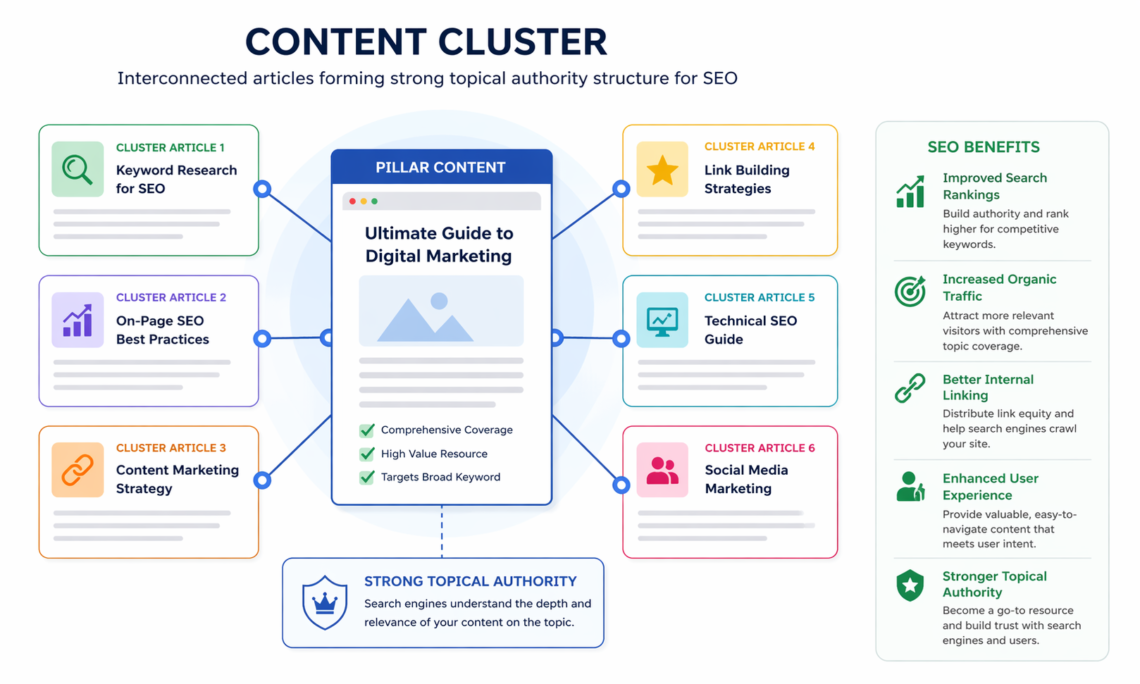
- Cluster of content enhances relevance and structure of the site.
- Internal linking enhances relationships within topics.
- It provides sustainable SEO performance and stability.
Defining Topical Authority
The concept of establishing oneself as a reliable source of information on a specific topic through regular publication of quality content, in depth, is called topical authority. You do not have to search using a single keyword, but rather on a topic and sub topics within that topic. This will give an indication to the search engines that your site is knowledgeable and trustworthy in that niche.
The way it affects Rankings.
The more your content is shown to be deep and relevant in a variety of articles, the higher your pages may be ranked by the search engines. The reason is that topical authority is more in line with the intent of the user hence making sure that the visitor is able to find what he/she is looking for. It also enhances engagement and this too improves SEO.
The major distinctions between Topical Authority and Keyword Density.
Depth vs Repetition
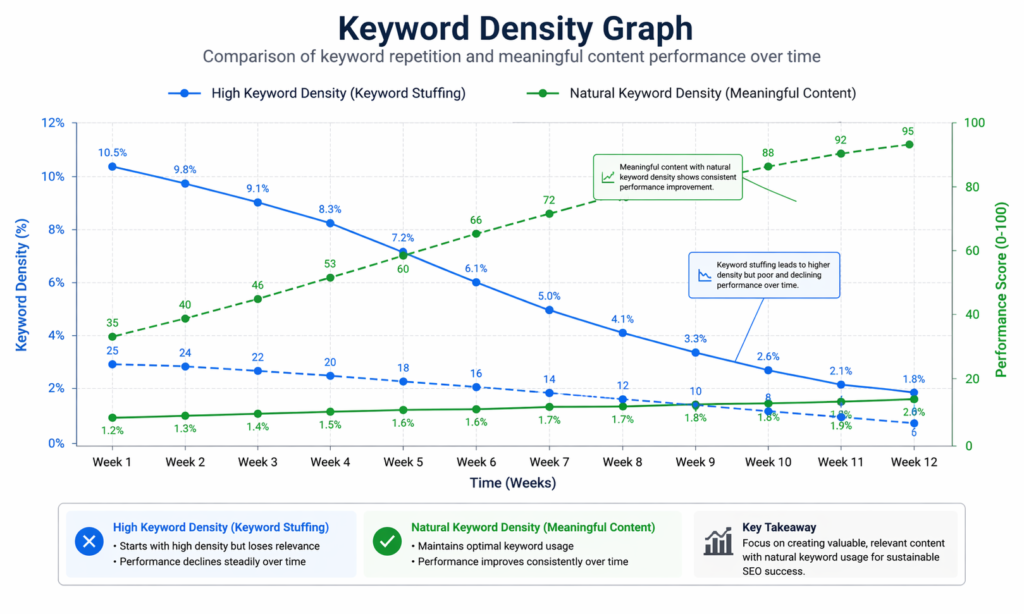
Topical authority highlights a full coverage of a topic, and the reader can become fully informed in a single location. Conversely, the keyword density is concerned with the repetition of given terms, mostly to the expense of content. This distinction underscores the fact that modern SEO is more focused on depth than repetition.
Context vs Exact Match
The search engines can now comprehend the context of the words used, i.e. can read between the lines and thus know how to interpret synonyms and similar phrases. This minimizes the relevance of the precise match of key words and promotes more natural forms of writing that are more helpful to user intent.
How Google’s Algorithm Has Evolved
AI and User intent Focus.
Artificial intelligence on modern algorithms is used to assess the content in terms of relevance, usefulness, and intent. It implies that it is no longer sufficient to just add keywords; content should provide real answers to queries of users in a significant manner.
The 10 Ways to become a Topical Authority in 2026.
Create Content Clusters
The process of creating content clusters is to construct a pillar page and have several related articles to support it. The structure assists the search engines to know the connection among the topics and enhances overall authority of the site.
Concentrate on Quality and not Quantity.
Rather than writing in bulk and quantity of superficial articles, write quality articles that have been researched well. Good content will ensure the users remain interested and that they visit more pages of your site.
Internal Linking and its role in SEO Development.
Internal linking is a very important aspect of building topical authority. Related Articles When you relate related articles within your site, you are assisting search engines to comprehend structure, and hierarchy of your article. This enhances crawlability and also makes the link equity shared well spread between pages. To users, internal links will give them a smoother navigation process which will direct them to the information they are interested in and will result in them spending more time on your site.
User Intent in Evolved SEO.
The key to effective SEO strategies in the present day is to understand the intent of the users. When you search, you should not only search with the key words but the users will want to know what they need. Do they seek information, solutions or comparisons? Producing content that directly fulfills these needs will not only help to achieve higher rankings but also establish trust and interaction. With content that is purposeful, it comes naturally to perform better in the search engine.
Conclusion
The topical authority in place of keyword density is indicative of the overall development of search engines. In the present day, SEO is all about developing valuable, user oriented content and not old optimization tricks. Although the usage of keywords remains a factor, keywords are no longer the most important aspect of ranking. With depth, relevance and user intent, you can create a robust base of long term visibility and growth.
FAQs
1. Is keyword density still important?
Yes, but it must be natural, and not forced into the text.
2. What is topical authority simply put?
It implies becoming a guru on a topic by exhausting it.
3. What can I do to enhance my SEO plan?
Pay attention to the quality of the content, user purpose, and internal connection.
4. Does Google punish stuffing of keywords?
Yes, too much use of keywords may negatively affect your rankings.
5. Topical authority or keyword density is better?
Topical authority is much more appropriate to contemporary SEO.
Share this content: