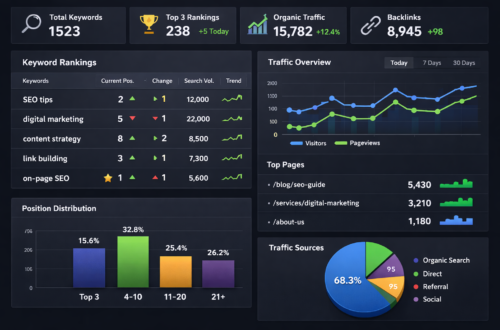
Search engine optimization (SEO) remains an important tool for organic traffic in the highly competitive world of digital marketing. But being ranked on very competitive keywords has been a challenge. Consequently, low-competition keywords are currently attracting the attention of marketers, bloggers, and businesses in order to optimize their search ranking.
The search tools that have been made necessary in determining these opportunities are the keyword research tools. These tools will enable the marketer to find keywords that are easier to rank with potential traffic by examining search data, keyword difficulty, and competitor data.
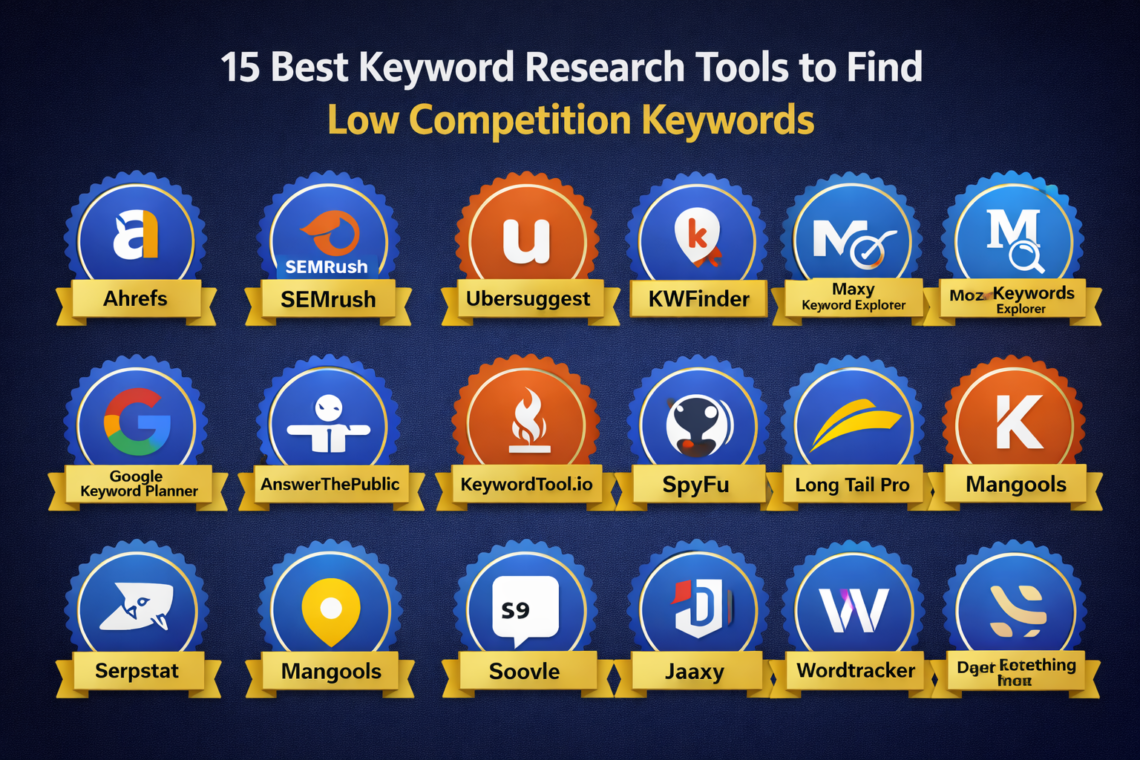
In this press release, the authors identify 15 most effective keyword research tools that can ensure that marketers find low-competition keywords, thus being able to create better SEO strategies and enhance their visibility on the Internet.
The importance of low-competition keywords.
Low competition terms, also known as “long-tail terms,” enable websites to attain visibility more easily since the number of websites competing against them is small. These keywords tend to be more narrow-focused in search intent, which tends to lead to greater engagement and improved conversion.
Low competition keywords can help businesses to gain more search rankings, targeted visitors, and develop domain authority over time. This is made easy using keyword research tools, which give comprehensive information on the volume of searches, level of competition, and variations of keywords.
The 15 Best Keyword Research Tools to Find Low-Competition Keywords.
1. Ahrefs
Ahrefs is considered to be one of the strongest existing SEO tools. Its Keyword Explorer also offers a detailed view such as the difficulty of the keyword, the traffic potential, and the SERP analysis. This enables marketers to find out which ones have less competition yet would yield good traffic.
2. SEMrush
Semrush provides a massive database of keywords and high research capabilities. The Keyword Magic Tool enables the user to find thousands of versions of the keyword and find long-tail keywords that are not highly competitive.
3. Ubersuggest
Developed by a digital marketer Neil Patel, Ubersuggest is a well-known free keyword research tool, which is famous because of its simplicity. It gives keyword suggestions, competition, volume of search, and SEO challenge ratings.
4. KWFinder
KWFinder is created to assist people in finding simple-to-rank keywords. It offers valid scores of keyword difficulty as well as SERP analysis; thus, it is perfect for bloggers and owners of niche websites.
5. Moz Keyword Explorer
Moz Keyword Explorer provides a number of useful metrics that include the difficulty of the keywords, opportunity score, and organic click-through rate. These are insights that can help marketers to choose keywords that have the highest ranking potential.
6. Google Keyword Planner
One of the most commonly used free keyword research tools is Google Keyword Planner, created by Google. It can assist users to locate ideas of keywords, approximate the amount of searches, and assess the intensity of competition.
7. Answer The Public
Answer ThePublic is concentrated on actual search queries of users. It visualizes questions and phrases that people are searching for on the internet, and this assists the marketer to pinpoint the long-tail keyword opportunities.
8. KeywordTool.io
KeywordTool.io is a tool that provides an autocomplete suggestion as a search engine service. It assists users to discover niche keywords, which might not be shown in the conventional keyword tools.
9. SpyFu
SpyFu is an expert on competitor analysis. It enables marketers to check the keywords that competitors rank and determine the potential of low competition.
10. Long Tail Pro
Long Tail Pro is created to find long-tail keywords that are profitable. It has competition analysis features that assist the user to choose easier-to-rank keywords.
11. Serpstat
Serpstat is an amalgamation of competitive analysis, keyword research, and rank tracking. It has a difficulty filter in its keywords, thereby ensuring that low-competition keywords are easier to find.
12. Mangools
Mangools is an SEO software that has a number of handy tools, among them being KWFinder. The site is user-friendly and provides valuable information on keyword research.
13. Solve
Soovle uses the keyword suggestions offered by several search engines, which include Google, YouTube, and Amazon. This assists the marketers to find out the unique opportunities of keywords in various platforms.
14. Jaaxy
Jaaxy is a keyword research tool that is commonly applied by affiliate marketers and bloggers. It assists users to easily know which keywords display low competition and search results analysis.
15. Wordtracker
Wordtracker also offers keyword proposals as well as competition information. This assists the marketers to find those keywords that are more likely to be ranked successfully.
Selecting an appropriate keyword research tool.
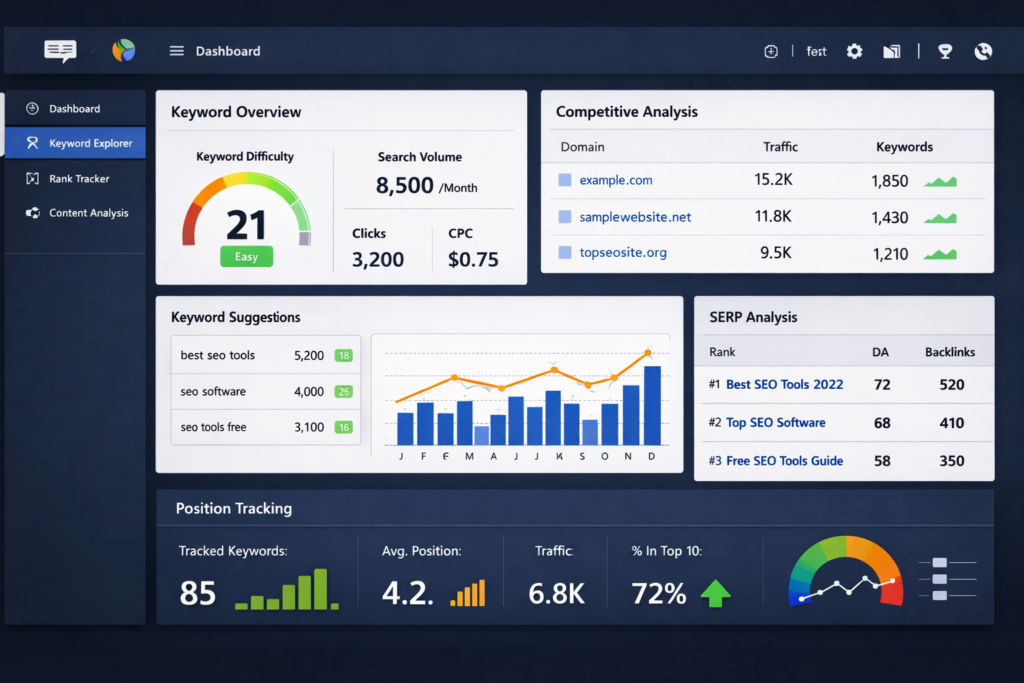
The choice of an appropriate keyword research tool will be determined by your goals and budget in the field of SEO. Novices can use free tools like Google Keyword Planner when they are starting out and more advanced tools like Ahrefs and SEMrush when they are established and require more in-depth analytics and competitor data.
The synergies of using various tools can be effective in the majority of cases since they operate on different sources of data and algorithms.
Conclusion
Identifying the appropriate keywords is one of the most essential points of effective SEO. The keywords with low competition are a good chance for businesses, bloggers, and online marketers who can easily rank higher and reach the right people.
Marketers can find good opportunities in profitable keywords and create a more powerful content strategy by researching reliable keyword research tools like Ahrefs, SEMrush, and Ubersuggest. With the future competition in search engines still rising, the investment into the appropriate keyword research tools will be part of the long-term SEO victory.
Frequently Asked Questions (FAQs)
1. What are low-competition keywords?
Low competition keywords are those search terms that are less competitive, as there is a lesser number of websites competing against the keywords, and the new or smaller websites can easily be listed within the search engine results.
2. What are the advantages of using long-tail keywords in search engine optimization?
Long-tail keywords are more specific search terms, which can also be less competitive and more likely to convert since they closely align with the intent of the user.
3. What is the best keyword research tool to use as a beginner?
Such tools as Ubersuggest and Google Keyword Planner are also regarded as easy to use due to their basic interfaces, which offer the necessary data related to a keyword.
4. What is the method of calculating keyword difficulty in the keyword research tools?
The majority of the tools consider the forces of domain authority, backlink profiles, and page strength that are already ranked in the search result list.
5. Do we have to employ paid keyword research programs?
The free tools may offer a minimum of knowledge, but the paid tools tend to give more insight into the analysis, their competition, and more extensive and sophisticated information on the keywords.
Share this content: